Research problem
Merchants with limited experience of digital financial products struggled with long forms, unfamiliar terminology, and KYC requirements.
Razorpay · Product design and research
Onboarding and KYC
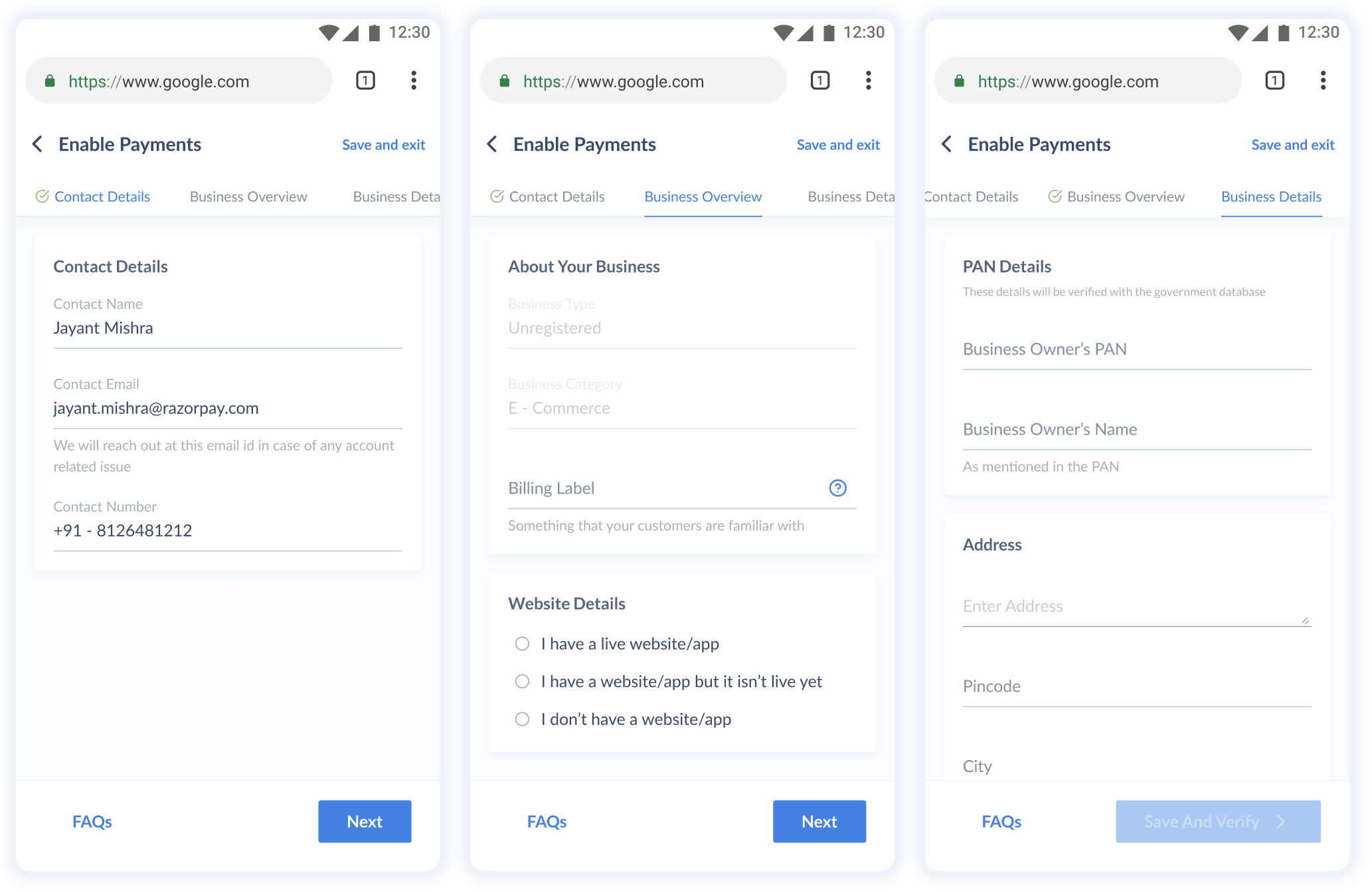
I led research and design for a mobile-first onboarding flow for merchants who were new to digital financial products. We studied where they struggled with KYC requirements and used the findings to redesign the flow.
My role
Primary UX Designer & Researcherresearch, synthesis, principles, interaction design
Timeline
Dec 2021 – Feb 2022three months of research, design, and usability testing
Team
4 product designersincluding me, with one UX writer
Methods
Recorded session review, support ticket analysis, cross-functional workshop, competitive analysis, bodystorming, usability testing
At a glance
Merchants with limited experience of digital financial products struggled with long forms, unfamiliar terminology, and KYC requirements.
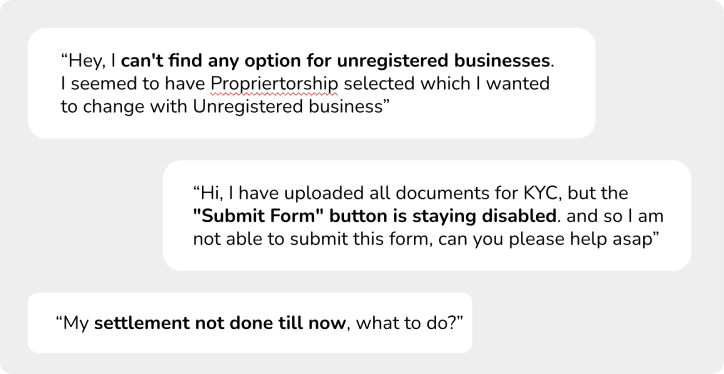
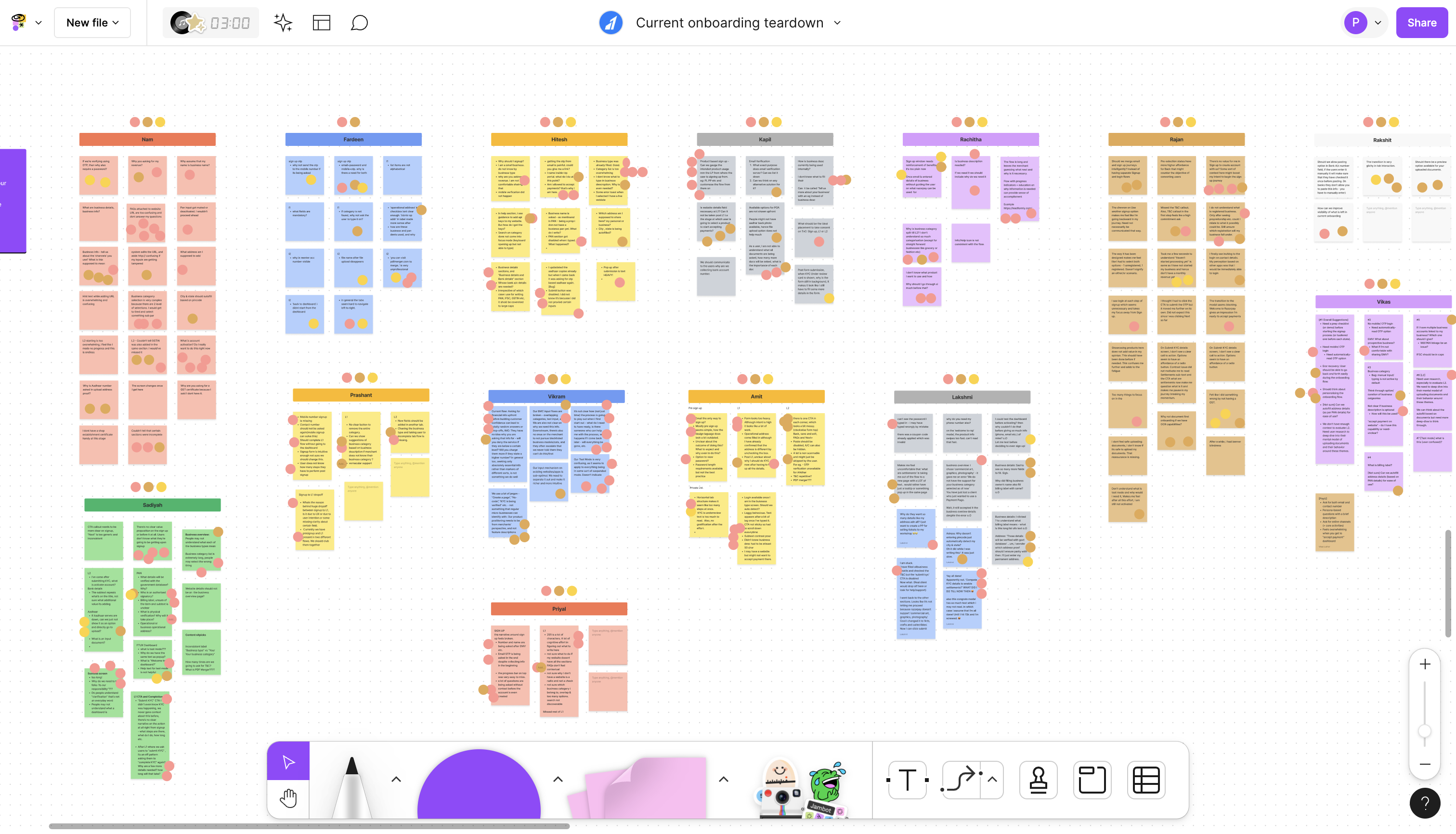
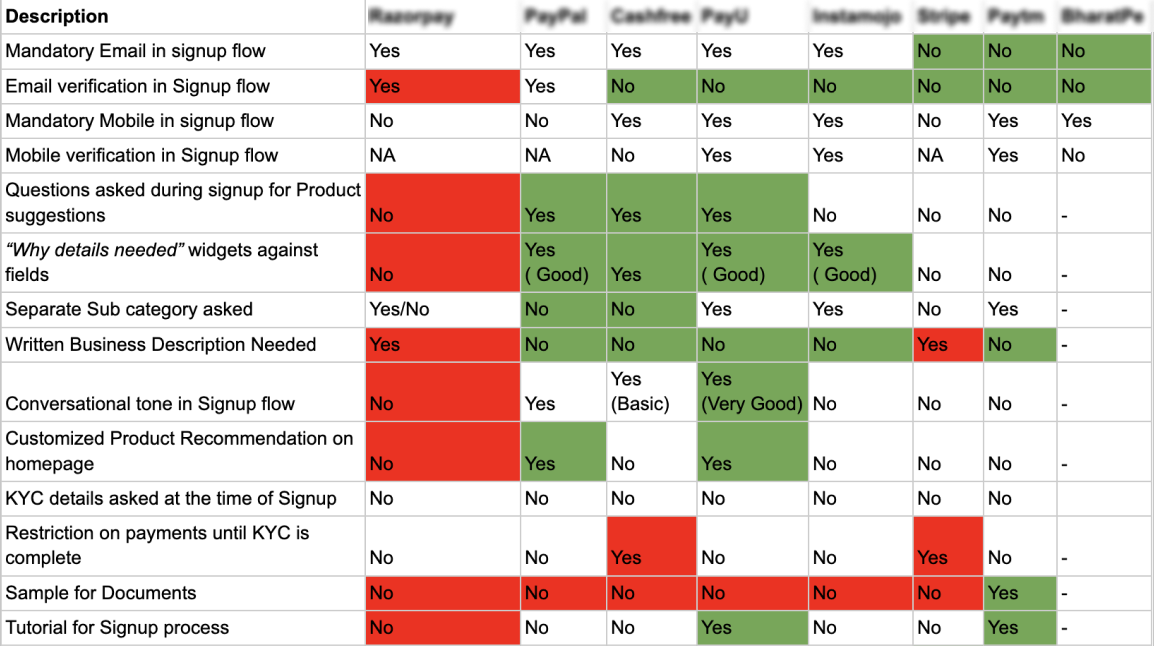
We reviewed recordings of more than 50 onboarding sessions and 150 support tickets, then conducted a cross-functional workshop, competitive analysis, and bodystorming exercise.
The findings informed a mobile-first flow that presented one question at a time. After launch, conversion increased while support tickets and completion time decreased.
Project context
As small businesses moved online during the pandemic, many first-time digital merchants attempted to join Razorpay. The onboarding flow required extensive business information for KYC, but it had been optimised primarily for desktop and experienced users.
The objective was to increase monthly transacting users while reducing onboarding support tickets.
Research approach
150+ tickets and 50+ onboarding sessions
Journey review and prioritisation
KYC fields, sequencing, and language
Simulation of assisted account opening
01
02
03
04
Key findings
The number of questions and limited progress information made the onboarding process feel open-ended.
Merchants interpreted unfamiliar business and compliance terms differently, even when the requested answer was brief.
Merchants wanted to understand why information was required and how Razorpay would use it.
We used these behaviors as inputs when designing guidance for KYC onboarding.
The redesigned experience
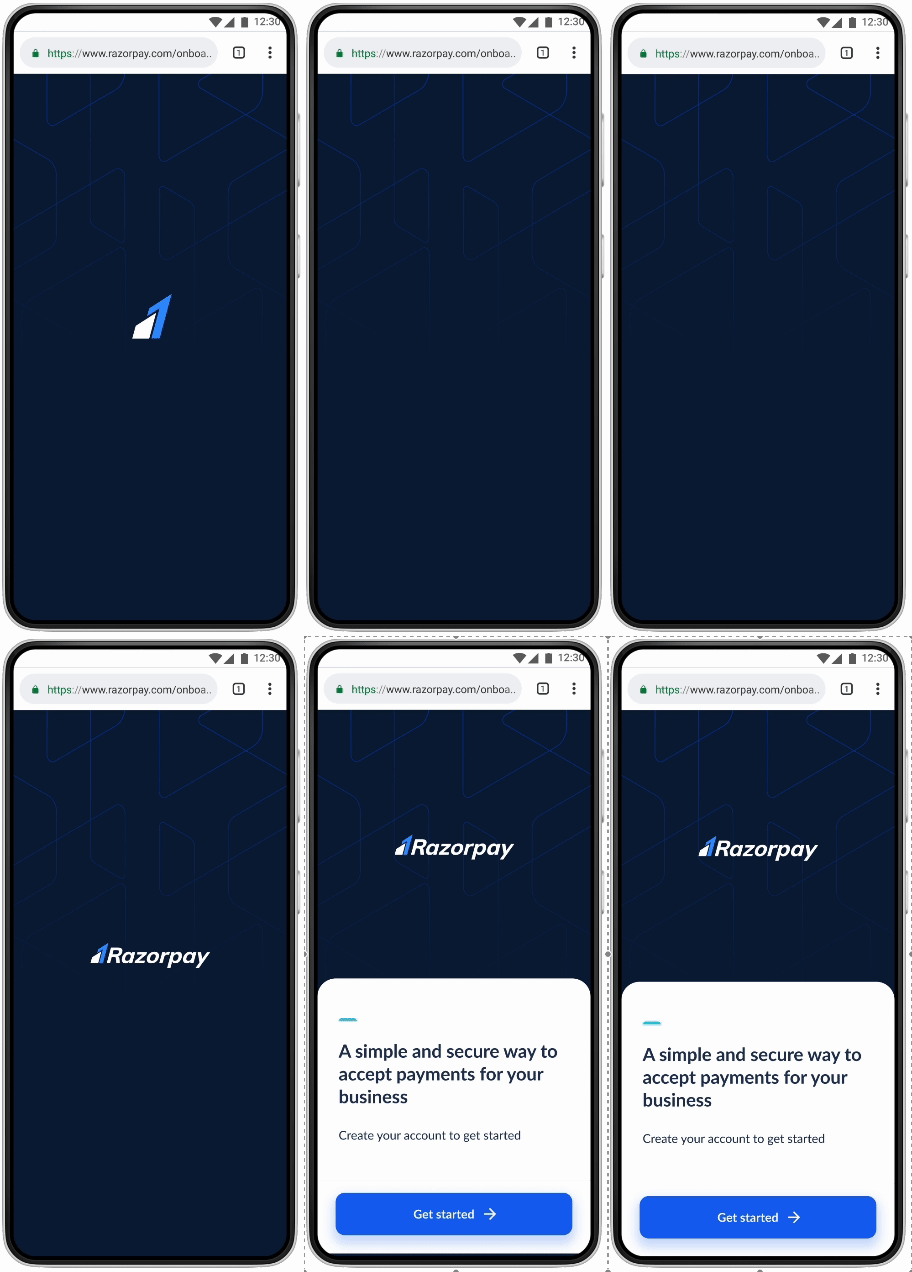
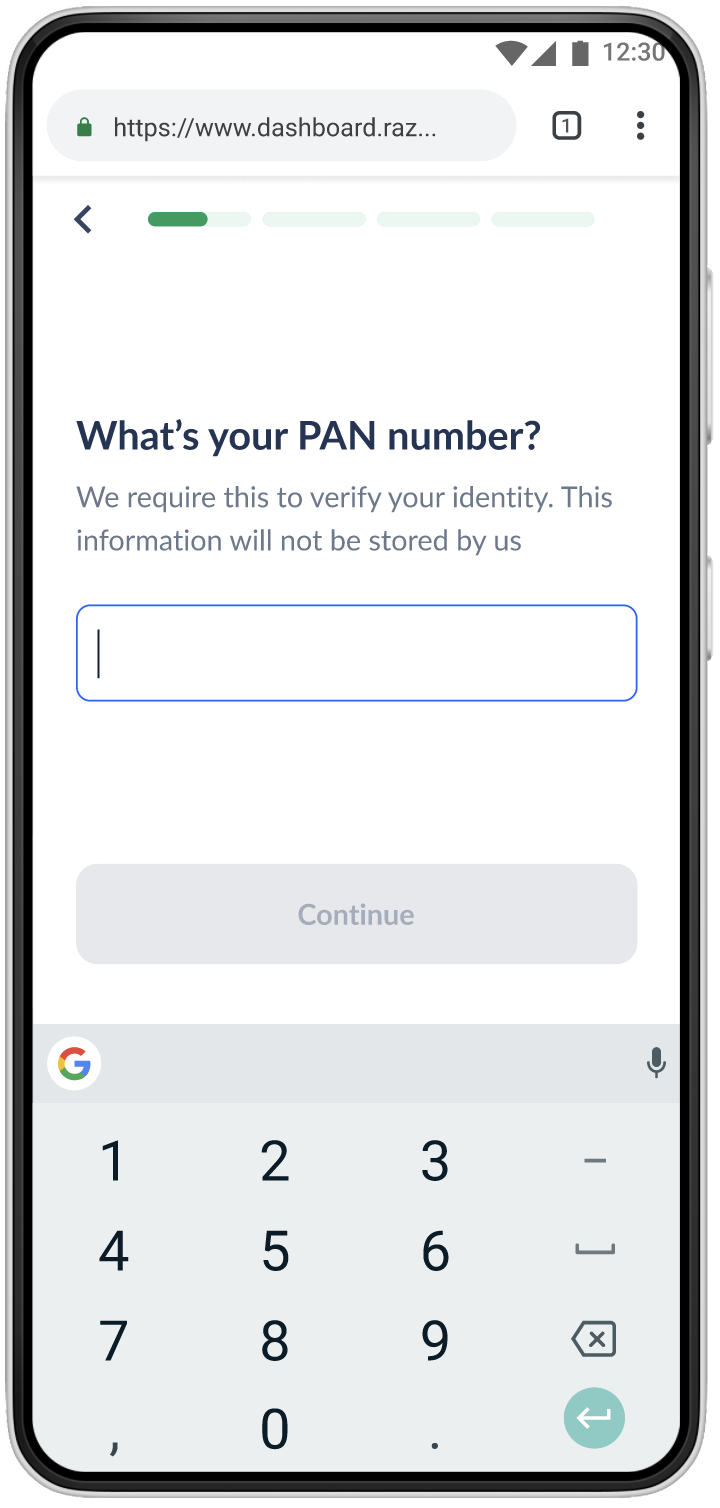
The desktop-first flow did not work well for merchants completing onboarding on mobile.
Optimize the complete onboarding flow for the primary device used by this merchant segment.
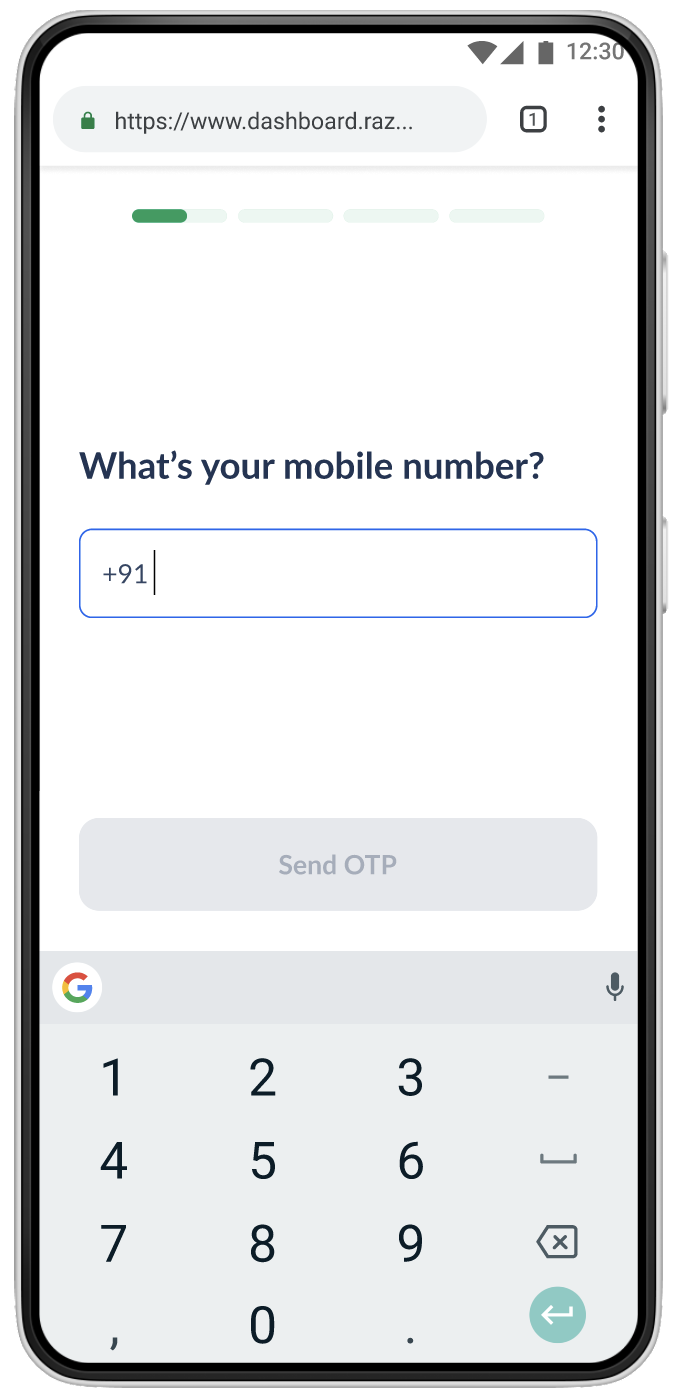
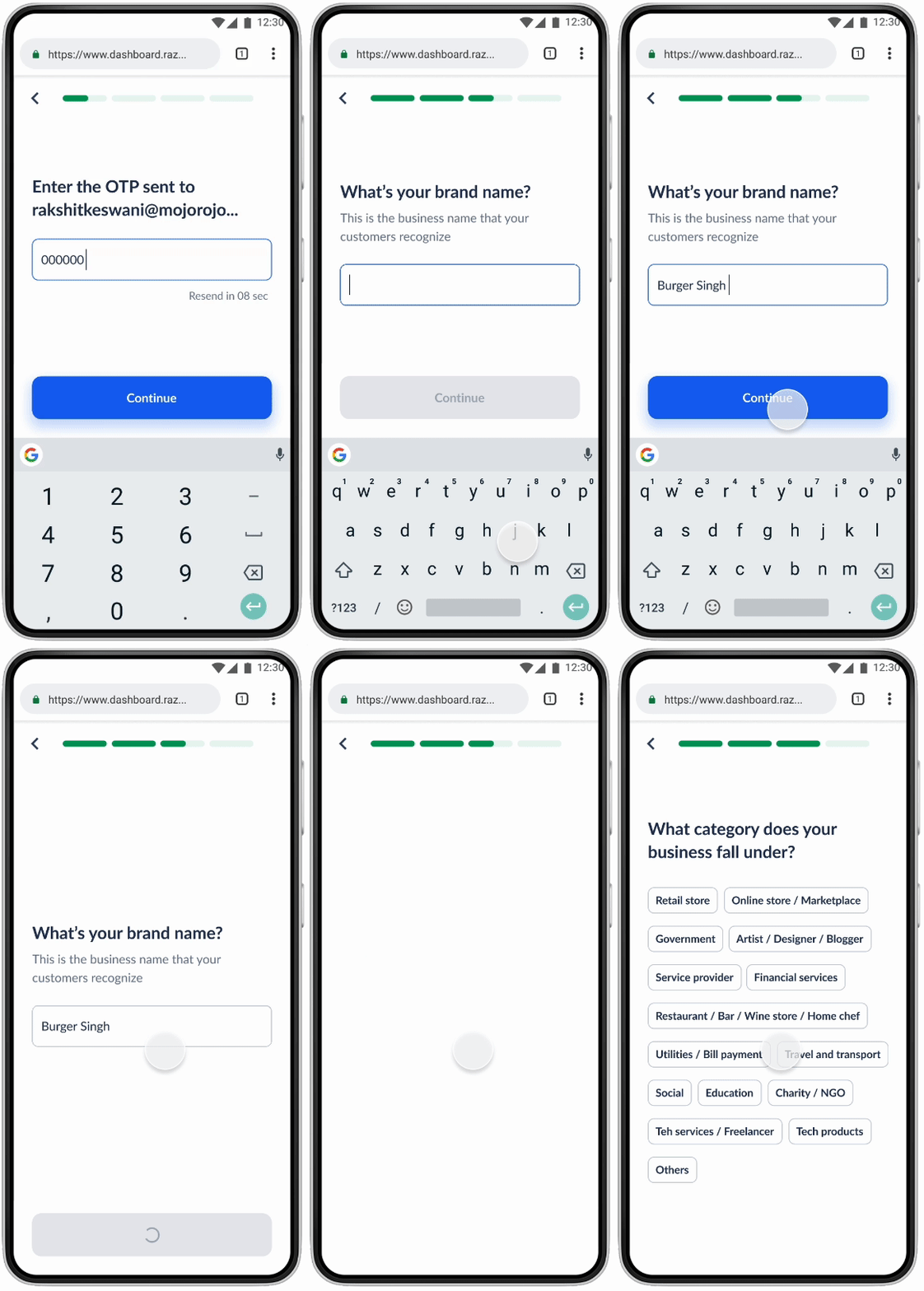
The long form felt open-ended, and merchants could not estimate the effort required.
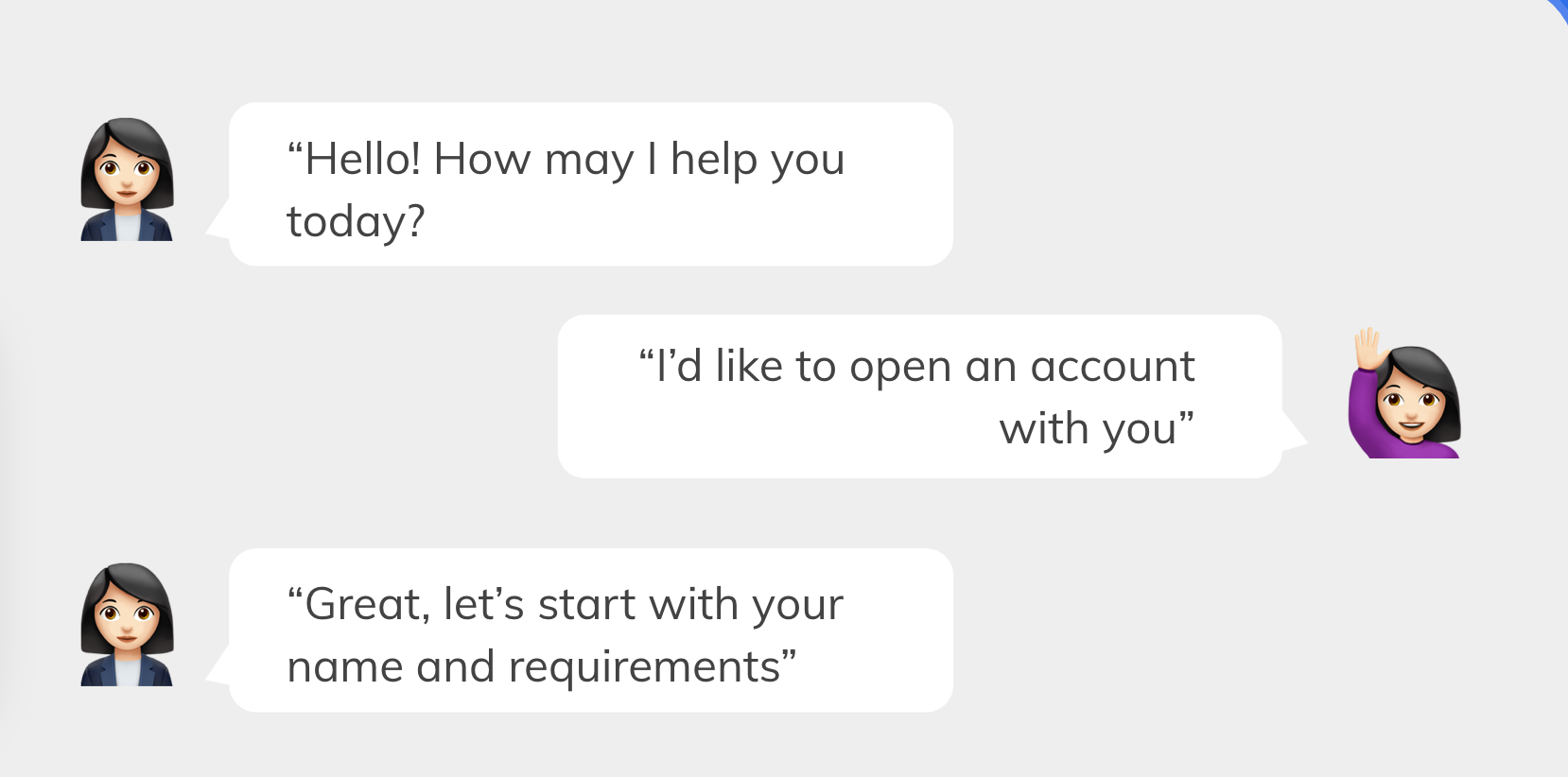
Frame fields as clear questions with an explicit next step, following the pacing of an assisted account-opening conversation.
Short field labels did not explain unfamiliar business and compliance terms.
Provide definitions and supporting information when merchants need them without overloading the initial screen.
Merchants wanted context before providing sensitive business information.
State why each piece of information is required and how it will be used.
Usability testing
The sessions evaluated usability, understanding of KYC requirements, and preference for the question-by-question format.
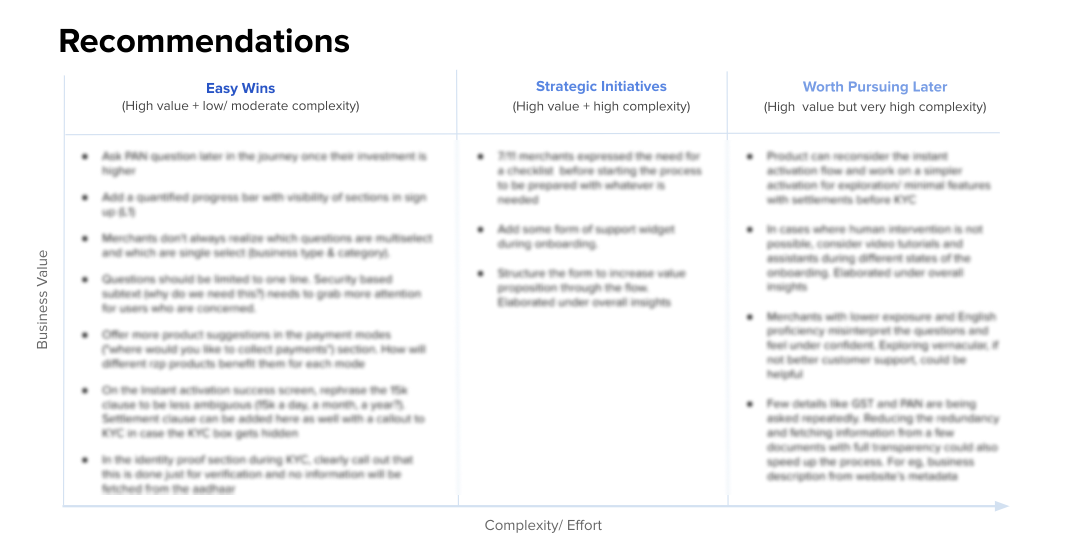
73% of participants, 8 of 11 merchants, preferred the redesigned onboarding. Testing also identified usability issues to address before launch.
Impact
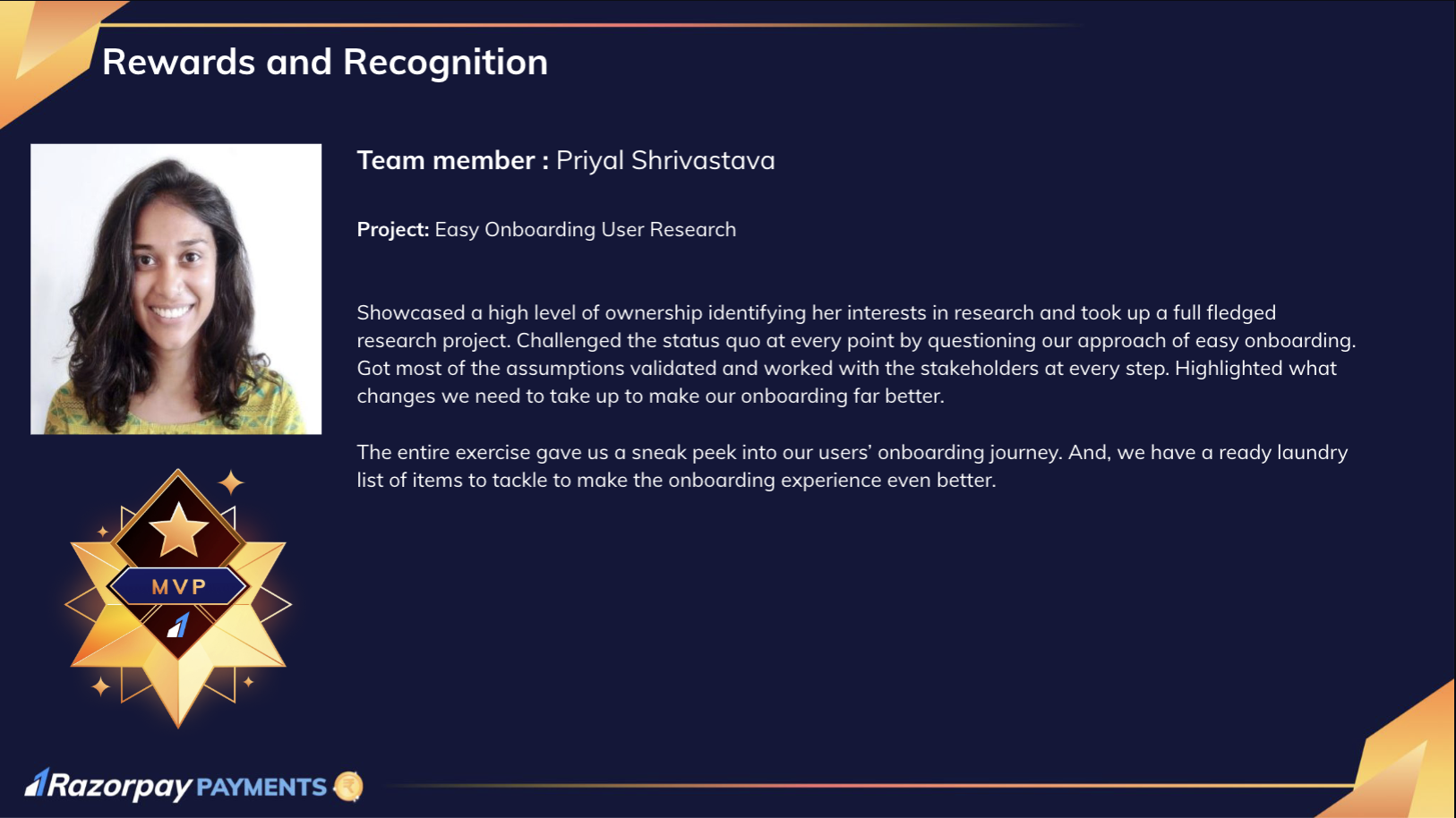
I received the MVP award for my contribution to the project. Detailed product material remains under NDA.
What I learned
The first primary research study took place late in the project, which limited the time available to incorporate findings before launch. In later projects, I planned exploratory and evaluative research earlier so that the team had more time to respond to participant feedback.